Bob Bauer
Lady in the LakeBob Bauer is a veteran columnist for The Baltimore Star, a man who has written his way from the bottom of the newspaper business to a position where he can pick and choose his assignments. He introduces himself to Maddie Schwartz on her stoop, a portly figure in a trench coat and hat, extending his hand with the simple declaration, "Bob Bauer." Maddie recognizes him immediately, knowing he has a popular column in the Star that runs with a winsome pen-and-ink sketch. His arrival marks a turning point in her life, as he becomes the conduit through which she seeks entry into the world of journalism.
The Columnist's Persona and Ambition
Bauer's self-conception is that of a man who has transcended the daily grind of news reporting. He describes himself as a columnist who doesn't have to break stories or worry about getting beat, a badge of honor that allows him to pontificate or write little sketches about his own life. His usual gig is writing about life in suburbia—his wife, his kids—but he feels the pull of bigger stories. He measures himself against the standard-bearer of Baltimore journalism, H. L. Mencken, noting that Mencken didn't get his own room at the Enoch Pratt Free Library by writing funny stories about his wife. The Tessie Fine case, however, compels him. He feels he has to write about her, to know the truth. He considers going to talk to the parents, confident they would open their door to him, because there is something about being a cartoon that makes people more susceptible to trusting him. He reflects on this often, on how he is an actual cartoon, a funny drawing come to life.
The Scoop and Its Aftermath
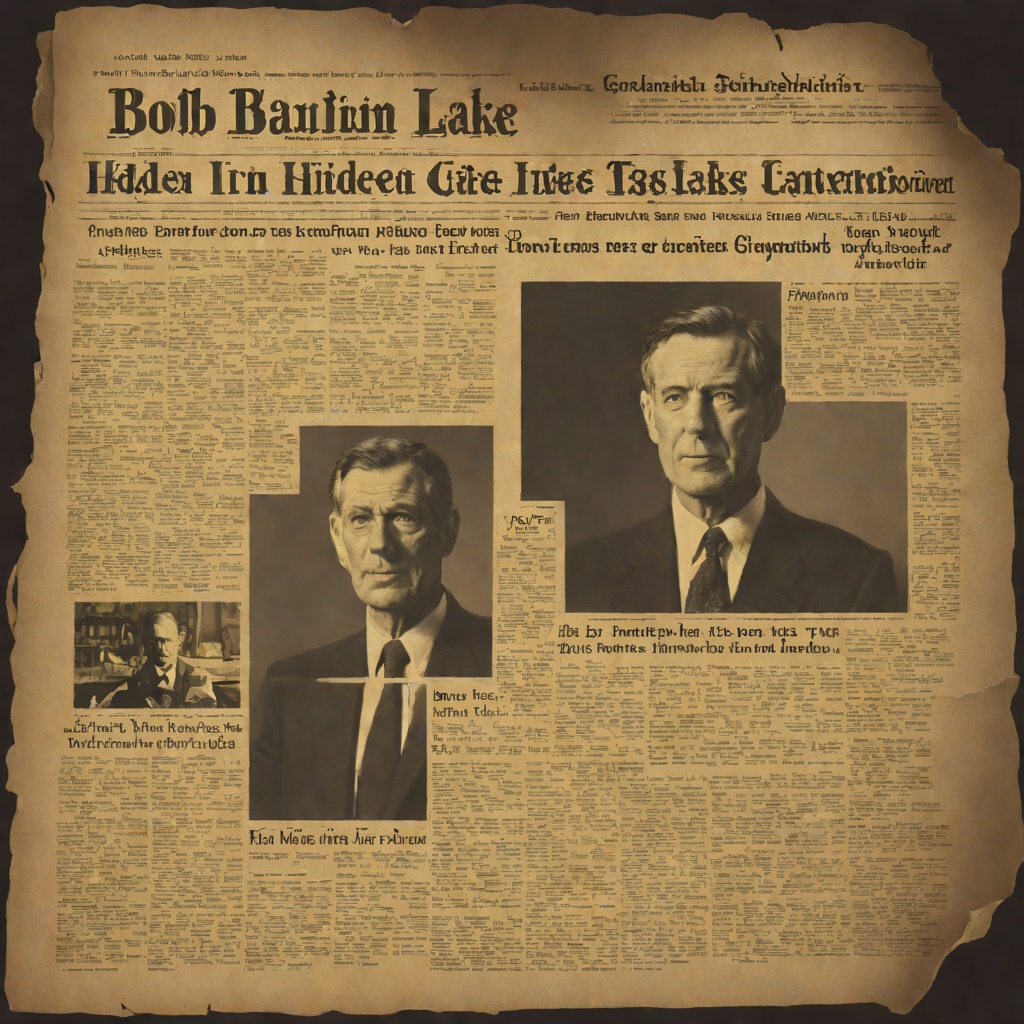
When Bauer's scoop on the Tessie Fine case runs, it is a sensation. All the other papers have to chase it, and the young cop reporters, even those on his own paper, are angry. The only exception is John Diller, whose sole concern is figuring out Bauer's source. Bauer revels in his triumph, sitting at his desk in the corner of the Sunday office while other reporters come by to pay homage and ask how he did it. He cocks a finger at them and smiles, saying, "Trade secret, men. Trade secret." Yet the victory is hollow. No one asks him out after work, and he admits he stopped going out with the guys a long time ago, and they stopped asking. He goes home to a sad, dark house in Northwood, where the woman who inspired "Betty" in his columns sits in a wheelchair, her body riddled with multiple sclerosis. She drinks all day, and Bauer does the best he can, which isn't much. He refuses to hire anyone because that would mean letting someone inside, exposing the lie of the fantasy life he has created for the paper—the jolly house where the wife does scatterbrained things and the husband is a foil and the son and daughter just laugh and laugh. The son lives in California. The daughter died of leukemia when she was three.
Encounter with Maddie Schwartz
When Maddie Schwartz first visits the newsroom, Bauer is surprised to see her. He leans back in his chair, and Maddie realizes the man she met on her stoop had been playing a part, pretending interest and empathy to get what he wanted. Now he doesn't need anything from her, or so he thinks. She tells him she wants a job, and he smiles, saying he's not the editor and doesn't do the hiring, adding that he's not sure he'd stump for a woman with no experience. Despite this dismissal, Bauer has already formed a private assessment of her. He thinks about what he should have told her: that everyone has secrets, that he has secrets, that he would find a way to write around hers. He wouldn't tell the world she is separated, and he doesn't need to know how she knew the police were looking at the fish store clerk. But he assumes her source was a man, reflecting a cynical view that a woman like her always has a man behind her.
The Weight of Secrets
Bauer's own secrets are the burden he carries. His public columns present a cheerful domestic life that is a complete fabrication. His wife, the real "Betty," cannot clean or cook, and his daughter is dead. He drinks, and who can blame her, he thinks of his wife. The contrast between his published persona and his private reality is stark, and it shapes his understanding of the world. He recognizes that everyone has secrets, and he is willing to protect Maddie's, even as he withholds his own. His interaction with her is filtered through his own experience of living a lie, and his assumption about her source reflects his belief that people are driven by hidden, often sexual, motivations. He is a man who has built a career on observation, yet he is blind to the possibility that Maddie's initiative could be her own, projecting onto her the patterns of his own compromised life.
A Life of Contrasts
Bauer's life is defined by contrasts: the public success and the private grief, the celebrated columnist and the isolated man, the jolly family man and the caretaker of a dying wife. His pursuit of the Tessie Fine story is driven by a need to connect with something real, to break out of the comfortable prison of his suburban sketches. Yet even his greatest scoop leaves him alone in a newsroom where colleagues congratulate him but never invite him out. He is a man who has achieved everything he set out to do professionally, only to find that the cost has been his connection to others. His story is one of a man trapped by the very persona he created, unable to let anyone inside the lie, and his brief encounter with Maddie Schwartz reveals both his cynicism and his profound isolation.